S’vivon, Sov Sov Sov! A Chanukah Spin-and-Freeze Movement Game & Dreydl Activity for the K-5 Music Classroom by John Crever
As winter approaches, many music teachers begin planning seasonal activities that honor diverse traditions while staying playful and musical. One of my favorite movement Chanukkah activities is a S’vivon (dreydl) Movement Game—a blend of rhythm, cultural learning, and pure kid-joy as they get permission to lie on the floor as the dreydl stops spinning. Below is a walkthrough of how to set it up, teach it, and extend it with traditional dreydl rhymes and gameplay.
Prepare Your Materials
- Four cards, each with one of the dreydl letters: Nun-נ, Gimel-ג, Hey-ה, Shin-ש.
(Print on cardstock and laminate so they’re easy to hold up. - A dreydl with the letters clearly marked.
- Space for students to spin and lie on the floor.
- Learn the song “Sivivon, Sov, Sov, Sov” (notation provided below).
Introduce the Dreydl Spinning Top
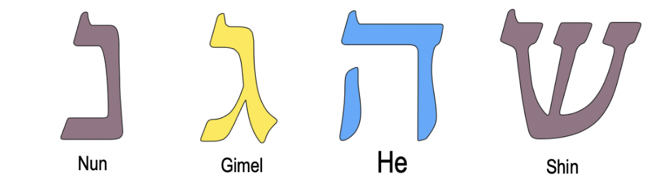
Begin by showing a dreydl and explaining that each side features a letter of the Hebrew alphabet. Name its four sides and connect each symbol to a matching picture card so students can clearly see the shape of each letter:
-
Nun – נ
-
Gimel – ג
-
Hey – ה
-
Shin – ש

A Little History and Language Context
Explain that the dreydl wasn’t always just a holiday toy. During the Roman occupation of Judea (around 63 BCE), Jewish people were forbidden to study Torah (Bible) and forced to adopt Roman religious practices. To keep learning in secret, they hid their Torah scrolls, and if soldiers approached, they quickly covered their work and pretended to be playing dreydl—a simple gambling game. Because of this, the dreydl has come to symbolize not only Chanukkah, but also resilience, creativity, and cultural survival.
Connect the Letters on the Dreydl
Next, connect each letter on the dreydl to its meaning and briefly tell the Chanukkah story: when the Jewish people regained control of their land, they found only enough oil to keep the Temple’s lamp burning for one day. Miraculously, the light stayed lit for eight nights, giving them time to prepare more oil and ultimately encouraging the retreat of the opposing army.
Explain that the four Hebrew letters on the dreydl form an acronym:
“Nes Gadol Hayah Sham” — “A great miracle happened there.”
- Nun – “Nes” (miracle)
- Gimel – “Gadol” (great)
- Hey – “Hayah” (happened)
- Shin – “Sham” (there)
Before teaching the game
Explain to students that the spinning top has two common names:
- S’vivon — the Hebrew word
- Dreydl — the Yiddish word (from dreyen, meaning “to spin”)
Both words refer to the same toy. Different families or communities may use either term. Let students know they may hear both names. The song we’ll use today is in Hebrew, so we’ll say “sivivon,” which means “dreydl.”
Teach the Freeze Game
Hold up each letter card and have students copy it — first with their hands, then with their bodies (standing, lying on the floor, or working with a partner to shape the letter).
Spend a few minutes on each letter so students can explore and refine their letter shapes. Prepare students for the game during this exploration by saying:
“What if I was the dreydl and spinning?” (Put your hands over your head to imitate a spinning top and slowly spin once.) “As the dreydl slows down it drops and lands on _______.” (Hold up the next letter in the sequence and prompt the students to form that letter with their bodies. Repeat for each letter, and on the last letter, check for understanding.)
Teach a “Safety Spin”
- Feet open and close like a Pac-Man mouth while moving clockwise
- Eyes stay slightly unfocused to prevent dizziness
- If students feel dizzy, stop spinning, jump in place, or briefly go cross-eyed to reset balance
Play the Dreydl Movement Game
- The teacher sings or plays the first half of S’vivon, Sov, Sov, Sov and prepares to display a letter card representing the letter the dreydl would land on.
- Students spin safely in place.
- When the singing stops, students freeze and form the shape of the letter card the teacher is holding.
- The teacher recites the short rhyme for that letter, reminding students what happens in the dreydl game. Students often like to mime putting coins in or taking coins out of the center as they hear the rhyme.
- Move through the four letters in order on the first pass. During this round, the teacher sings the second half of the song (“Chag simcha… haya sham”). On the next round, return to the first half of the song, then alternate halves with each new round.
- After three rounds, when students expect the Shin letter, surprise them by repeating a previous letter. This creates joyful anticipation and refocuses attention.
- Continue for several rounds, pretending to play a real dreydl game by choosing a random letter each time. End on Gimel so students can pretend to take all the winnings.
- For a fun extension, add real or pretend “winnings” like chocolate coins (gelt). Make sure there’s enough for everyone. As the game progresses, add or remove items from the “pot” based on each spin’s outcome. This helps students visualize how the center pile grows and shrinks while focusing on forming letter shapes. End by landing on Gimel, allowing students to “win” and divide the pot.
Learn the Song – S’vivion (Sivivon)
| Hebrew | English Translation |
|---|---|
| S’-vi-von sov sov sov, Cha-nu-kah hu chag tov Cha-nu-kah, hu chag tov S’-vi-von, sov sov sov. Chag sim-cha hu la-am, |
Dreidel, A joyous holiday for the nation. |
There are many ways to sing this popular song. Here’s a YouTube sing-along I made during the COVID pandemic.

Bringing It All Together
The S’vivon movement game and dreydl activities are a festive way to combine:
- Music and movement
- Cultural understanding
- Vocabulary development
- Game-based learning
- Joyful seasonal celebration
Whether you use just the movement game, just the chance game, or both, students love the energy, surprise, and physical creativity of “S’vivon, Sov Sov Sov!”
How to Play the Dreydl Game (Classic Version)
Getting Started
- Each player should have some “currency” to play with: chocolate coins (gelt), marshmallows, Tic Tacs, jelly beans, or wrapped candy.
- Each player puts five small pieces of currency into the center pile.
- Players take turns spinning the dreydl.
- The letter that lands face-up tells students what to do.
- Use simple English rhymes to help students remember the rules. Teach these using call-and-response.
- Players with nothing left are out. The last player remaining wins.
| Letter | Action | Rhyme |
|---|---|---|
| Nun – נ | Do nothing | “Num, nun, we don’t get one!” |
| Gimel – ג | Take the entire center pile | “Take the win if Gimel you spin!” |
| Hey – ה | Take half the pile | “Hey, hey, take half away!” |
| Shin – ש | Put one object into the pile | “Shin, shin, put one in!” |
Extension: Gematria Dreydl
For older students, Hebrew letters have numeric values (gematria):
- Nun = 50
- Gimel = 3
- Hey = 5
- Shin = 300
Students take turns spinning; the first to reach 1,000 wins. This version integrates math, probability, and strategy.
Bringing It All Together
The S’vivon movement game and dreydl activities are a festive way to combine:
- Music and movement
- Cultural understanding
- Vocabulary development
- Game-based learning
- Joyful seasonal celebration
Whether you use just the movement game, just the chance game, or both, students love the energy, surprise, and physical creativity of “S’vivon, Sov Sov Sov!”

John Crever
John Crever is a music educator, clinician, and FAME-endorsed teacher trainer who serves on the FAME Board of Directors, coordinating media and supporting the Teacher Trainer Committee. Endorsed to teach all three Feierabend certification courses, he developed FAME’s virtual certification courses and continues to expand access through innovative “pop-up” offerings in all places west of the Mississippi and beyond. In 2025, he received a FAME Award for exemplary service, honoring his dedication and leadership to the association. He lives in Portland, Oregon, where he teaches high school choir and continues inspiring music educators worldwide. Read more about John Crever and the Endorsed Teacher Trainers.