Featured
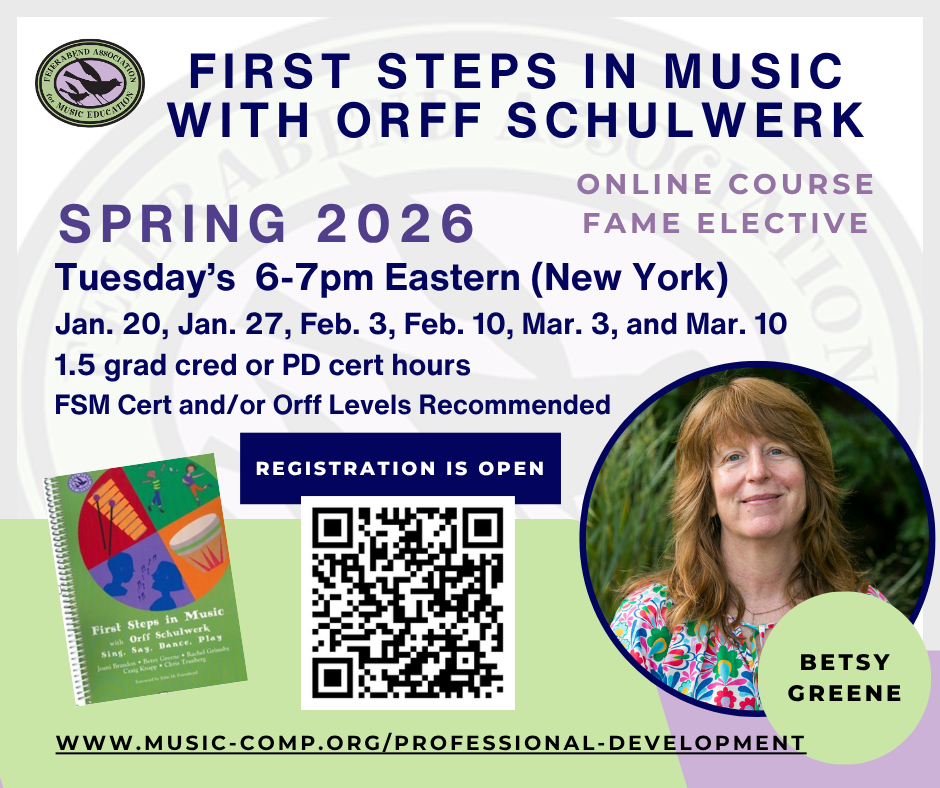
First Steps in Music w/Orff Schulwerk
Certification Course
Tuesdays: Jan. 20, Jan. 27, Feb. 3, Feb. 10, Mar. 3, Mar. 10 1.5 grad credits or PD cert hours
Tuesdays: Jan. 20, Jan. 27, Feb. 3, Feb. 10, Mar. 3, Mar. 10 1.5 grad credits or PD cert hours
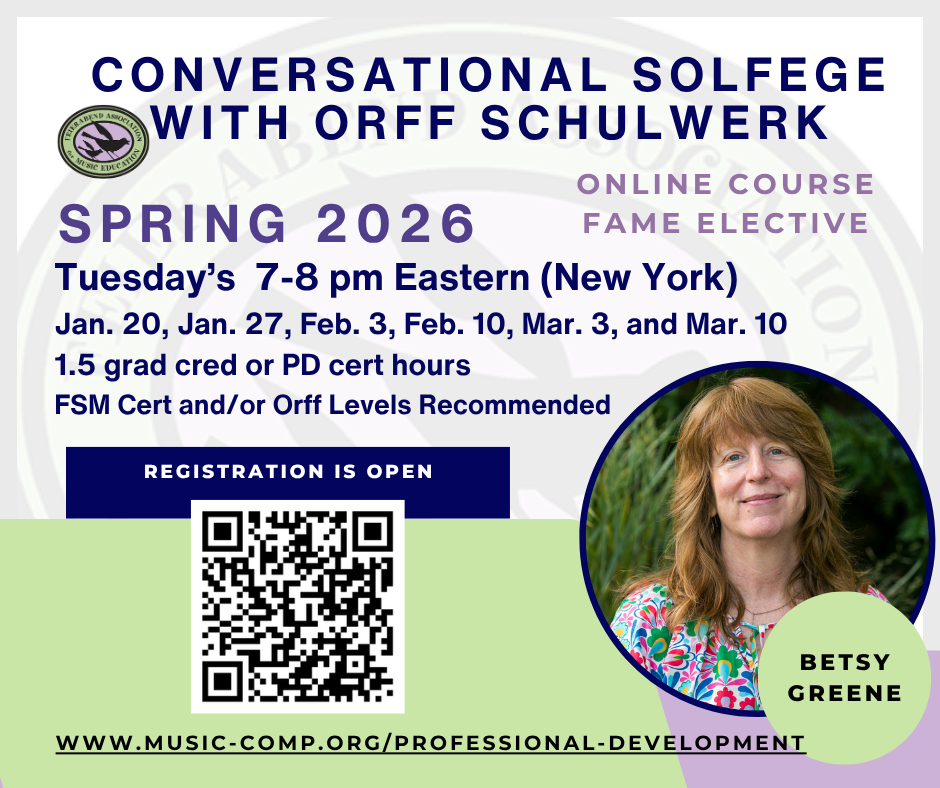
Tuesdays: Jan. 20, Jan. 27, Feb. 3, Feb. 10, Mar. 3, Mar. 10 1.5 grad credits or PD cert hours
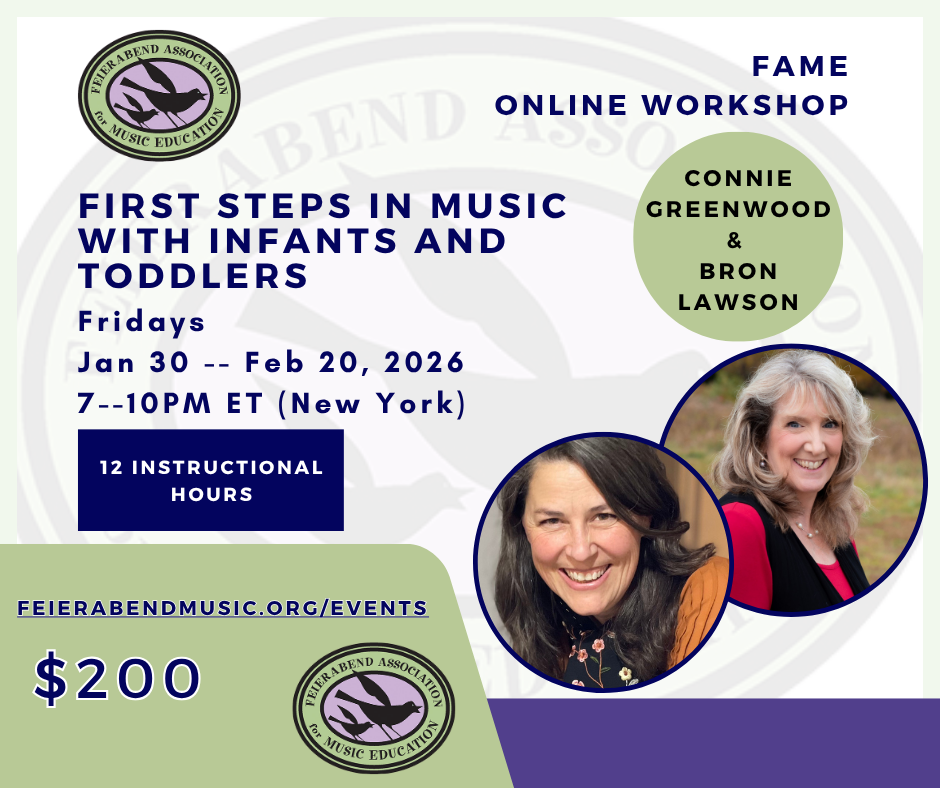
FRIDAYS: Jan. 30, Feb. 6, Feb. 13. Feb. 20 Discover how joyful, research-based music-making supports brain development in babies and toddlers. In this engaging workshop, Bron and Connie share […]
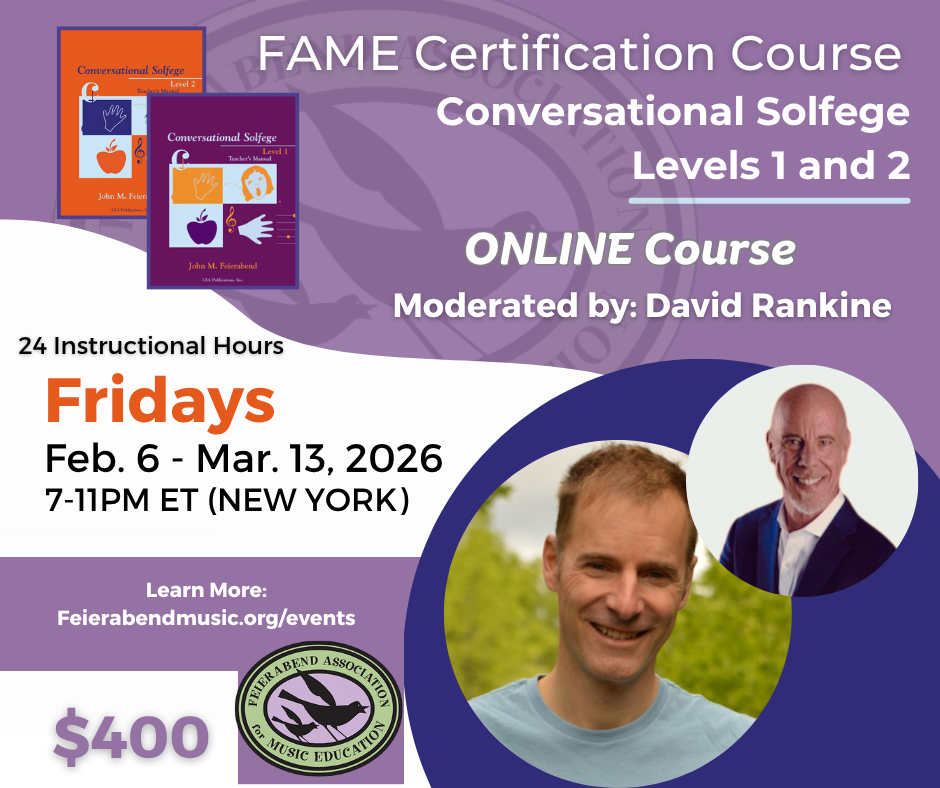
Earn your official Conversational Solfege Levels 1 & 2 Certification from the Feierabend Association for Music Education (FAME) in this engaging, fully online course!
Hosted live on Zoom by a FAME-certified moderator, each session features recorded lectures by Dr. John Feierabend, interactive discussion, and guided reflection. You’ll explore the complete Conversational Solfege approach—a joyful, literature-based method that builds musical independence through rhythm and tonal syllables, leading students from “sound before symbol” to reading, writing, improvising, and composing music.
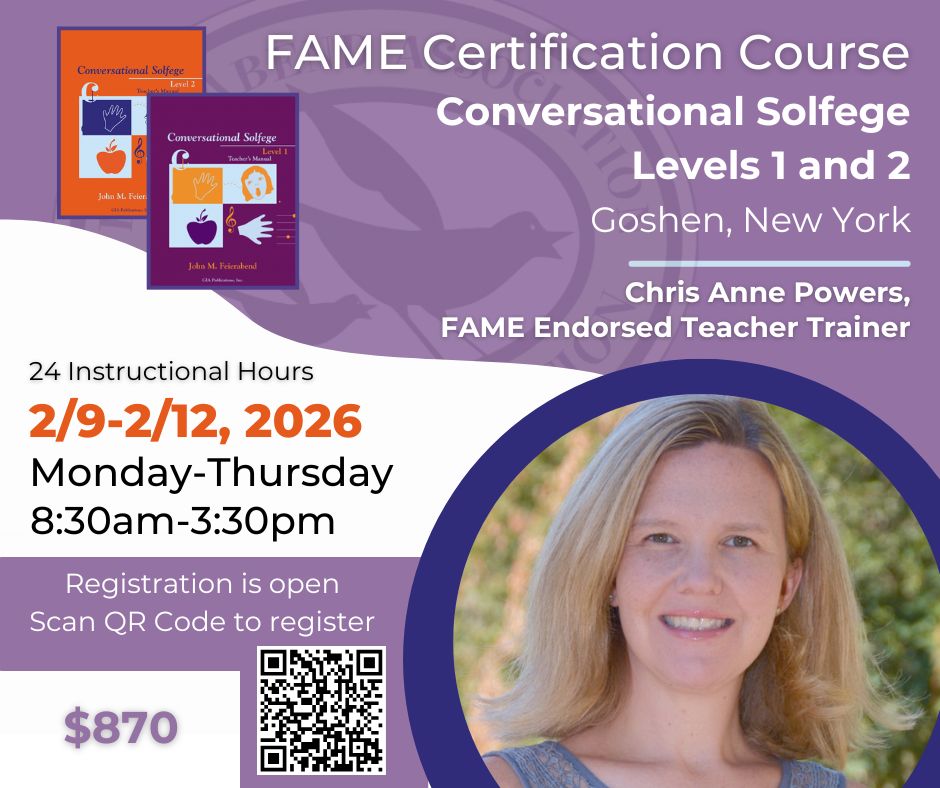
With the Conversational Solfege approach, music literacy starts with an “ear-before-eye” philosophy. Songs are broken down into their component parts and then reassembled so students grow in musical understanding. This […]
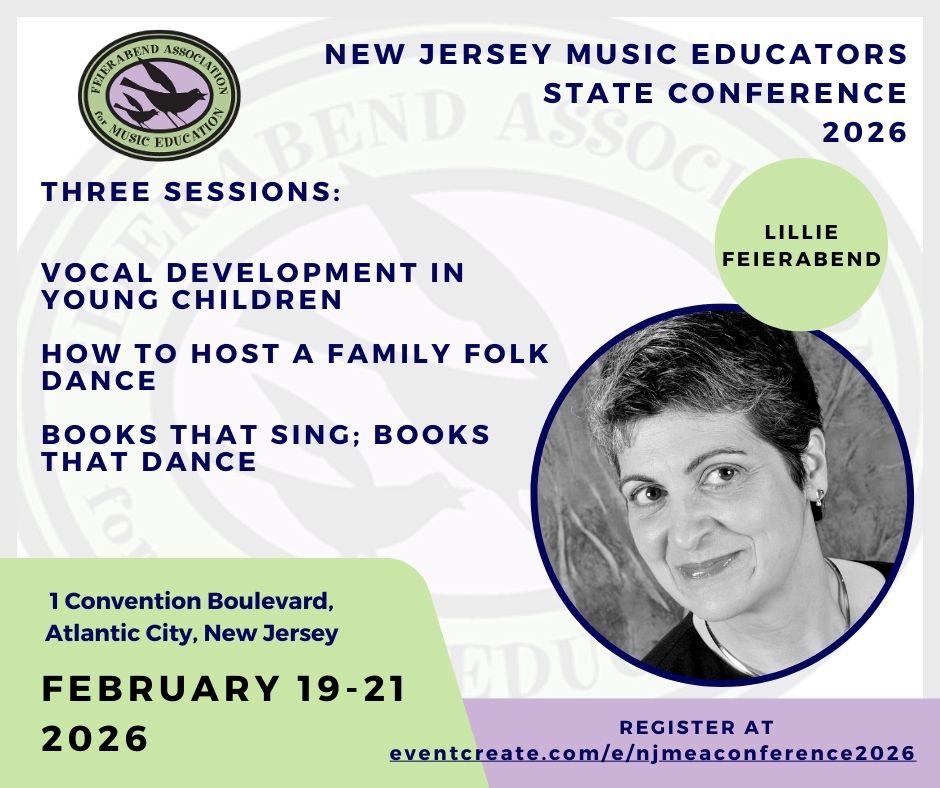
CONFERENCE: New Jersey Education Association - Atlantic, NJ
CONFERENCE: New Jersey Education Association - Atlantic, NJ
CONFERENCE: New Jersey Education Association - Atlantic, NJ
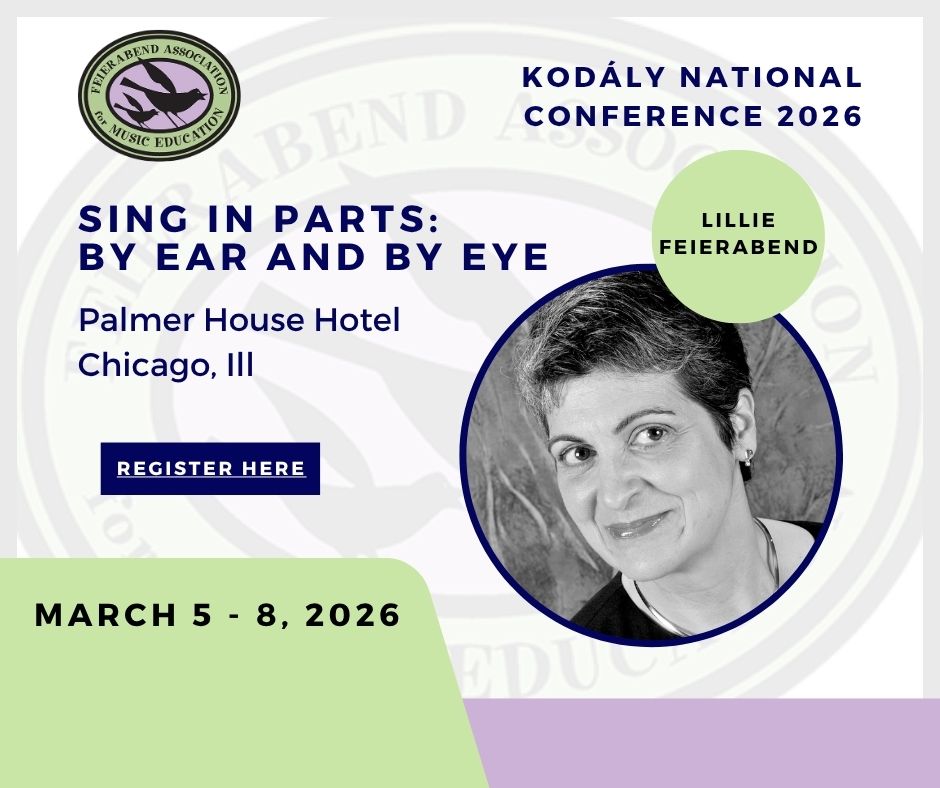
Transitioning from unison to part singing, melody to harmony, and aural to visual, can be challenging for upper elementary and middle school students. Proven strategies for developing part-singing by ear and eye are critical for the preparation of choral singing in the later grades. But where, and how to begin? This lively participatory session will address the part-singing challenges that occur in the development of part-singing competency. Participants will be guided through the sequential steps necessary to guarantee success. This sequenced approach begins first with the ear, utilizing bass lines, partner songs, vocal chording, rounds and canons to help strengthen aural recognition, and then, by eye, through sight-reading, utilizing bass lines and two-part choral arrangements. Participants will be actively engaged throughout the presentation, experiencing each component. A handout and choral octavos will be provided. When we introduce students to an appropriate sequence of learning, they can be on their way to not only sing with understanding and joy during their school years, but will have the necessary skills to sing independently, and with others, throughout their life.
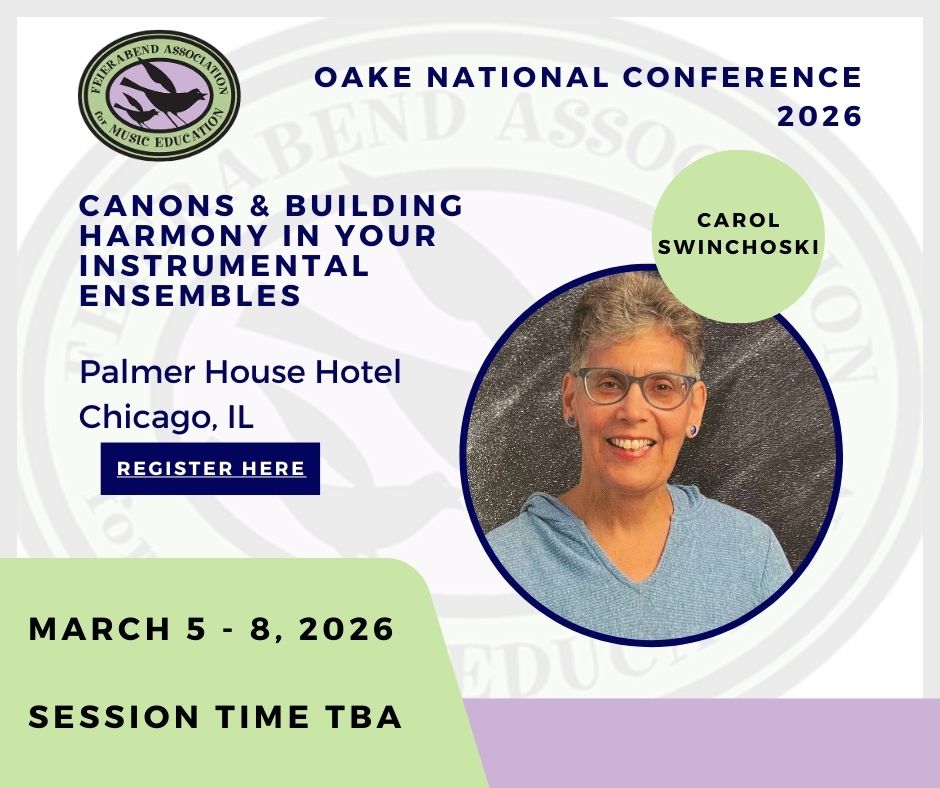
CONFERENCE: Oake National Conference 2026