
Move It! Chopin's Waltz in A Minor Choreographed by Peggy Lyman Hayes and John Feierabend
About the Music
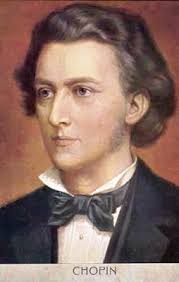
Frédéric Chopin was a Polish composer and pianist who lived during the 1800s and became famous for his expressive piano music. His Waltz in A Minor is a graceful, lilting piece marked Allegretto, meaning moderately fast and lively. Listen for the characteristic “oom-pah-pah” accompaniment that gives a waltz its three-beat dance feel and notice how the flowing melody sounds thoughtful and a little sad before briefly becoming brighter. Chopin uses changes in melody and harmony to create different moods, showing us how instrumental music can express feelings and tell a story without words.
This Move It! was choreographed by John Feierabend and Peggy Lyman Hayes, who invite students to explore the music’s character and phrasing through expressive movement.
Listen to the Waltz in A Minor
What Makes This a Great Move It!
Chopin’s waltz offers students an opportunity to experience musical elements with their whole bodies while remaining seated in a circle and passing their stuffie, after a brief chance to match their stuffie’s expressivity to the music. The lilting triple meter, flowing melodic lines, and changes in musical expression encourage students to notice how the music moves and respond with movement of their own.
As students move, they can explore how a melody can feel graceful, playful, reflective, or full of longing—and how movement can communicate those different qualities.
A Note to Teachers
Invite students to listen closely to the music and notice its character before beginning the movement activity. Encourage them to experience the melody’s flow, rather than focusing on feeling the waltz pulse, and respond to changes in the music.
Before beginning, invite students to imagine they are gently caring for a beloved stuffed animal, and sharing it with the people in their circle. This simple backstory lends meaning to the gentle, expressive movements and encourages students to convey warmth and tenderness through their gestures.
Focus on helping students attend to what they hear. How does the movement reflect the music? What changes when the melody or musical mood shifts?
Even a small adjustment to a gesture can help students respond more expressively to the music. Here are two examples:
Section A: Make Each Circle a Little Higher
As students make a circular motion from left to right, invite them to rise just a bit higher with each repetition. This subtle change matches the musical phrase and gives students an artistic movement goal: to let the movement grow along with the music.
Section B: Pet, Don’t Pat
Use the word pet rather than pat when describing this gesture. Pet encourages a gentle, expressive motion, while pat might suggest keeping a steady beat. The goal is to help students match the character of the music rather than simply mark the pulse.
These details remind us that expressive movement is about more than performing a sequence of gestures. Students learn to listen for changes in the music and make thoughtful adjustments to the quality, direction, and shape of their movements.
Explore the Details!
Read through the complete movement directions below for details that will help you guide students in matching their movements to the music’s character and expressive nuances.
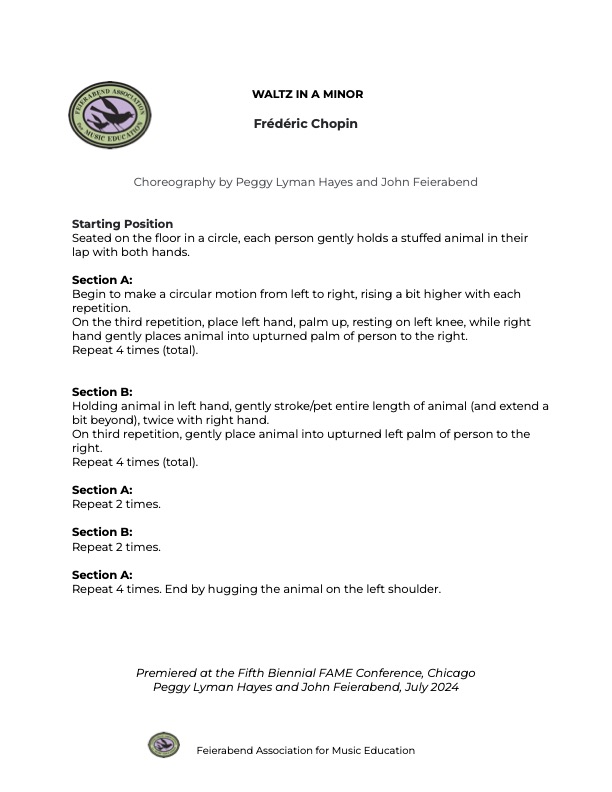
Move It! Directions: Waltz in A Minor
Composer: Frédéric Chopin
Choreography: Peggy Lyman Hayes and John Feierabend
Starting Position
Seated on the floor in a circle, each person gently holds a stuffed animal in their lap with both hands.
Section A:
Begin to make a circular motion from left to right, rising a bit higher with each repetition.
On the third repetition, place left hand, palm up, resting on left knee, while right hand gently places animal into upturned palm of person to the right.
Repeat 4 times (total).
Section B:
Holding animal in left hand, gently stroke/pet entire length of animal (and extend a bit beyond), twice with right hand.
On third repetition, gently place animal into upturned left palm of person to the right.
Repeat 4 times (total)
Section A
Repeat 2 times.
Section B
Repeat 2 times.
Final Section A
Repeat 4 times. End by hugging your stuffed animal against your left shoulder.
🎵 Word Wall
Words to use as you listen to Chopin’s Waltz in A Minor
Classical Music
Composer
Solo
Piano
Waltz
Allegretto
A Teachable Moment
Chopin’s Waltz in A Minor provides a natural opportunity to explore how music communicates emotion and character without words.
After experiencing the Move It! ask students:
-
- Did you notice the way the music moved?
- Did the music’s mood change? How could you tell?
- Which movements helped you express what you heard?
- If you were creating your own movement for this music, what would you choose?
Let the Music Move You
Put on Chopin’s Waltz in A Minor and discover how movement can deepen students’ connection to the music. Try this new Move It! activity and let Chopin’s expressive melodies inspire your classroom!